South Florida Local News
Commissioner Wilton Simpson issues emergency rule to protect Florida agriculture from growing New World Screwworm threat

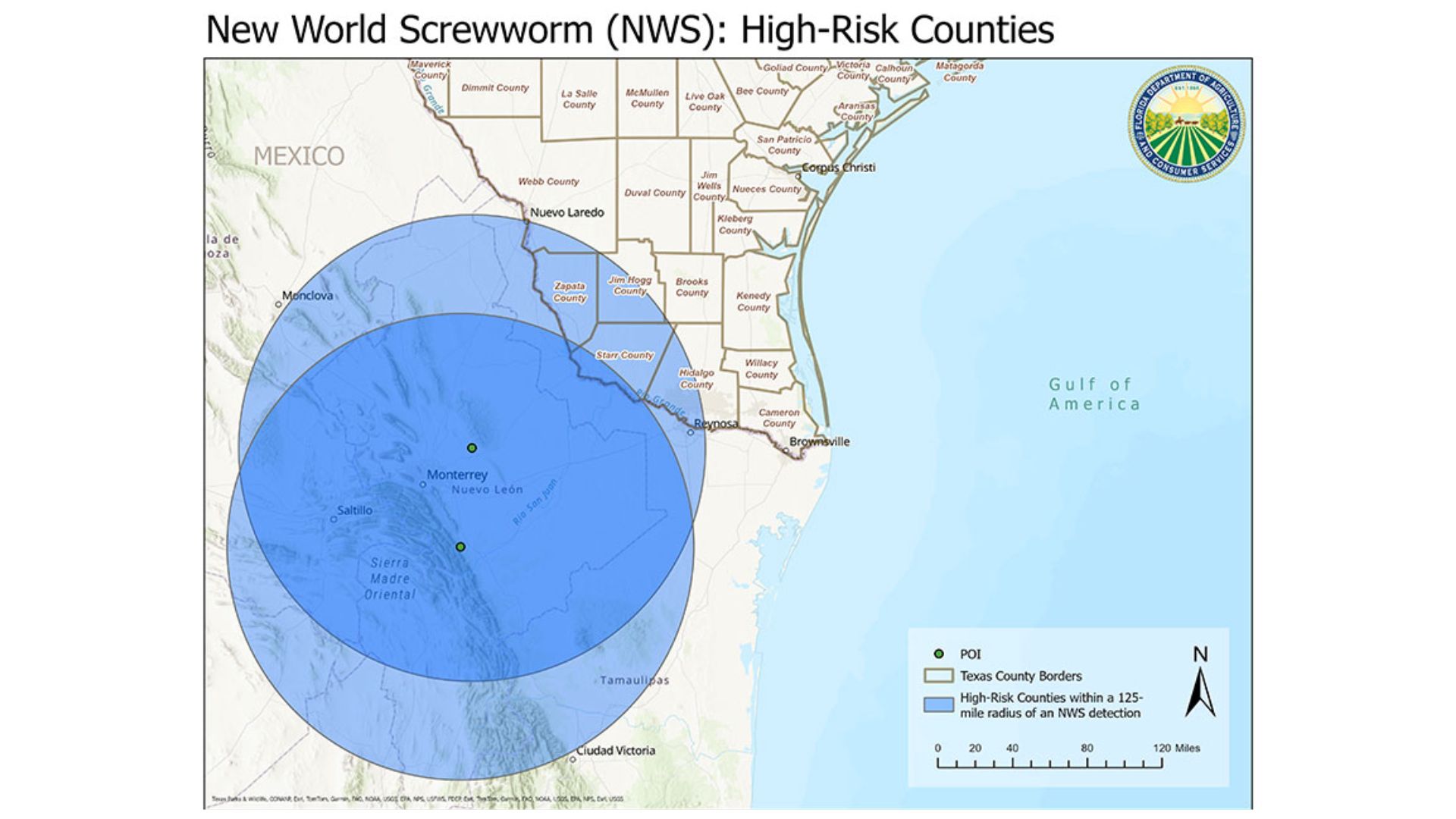
Tallahassee, Florida – A growing threat just beyond U.S. borders has prompted swift and decisive action in Florida, where state agriculture officials are moving to prevent a dangerous pest from gaining a foothold. With recent detections of the New World Screwworm inching closer—now within roughly 125 miles of the southern border—Wilton Simpson, Commissioner of the Florida Department of Agriculture and Consumer Services, has issued an emergency rule aimed at tightening protections across the state.
The measure introduces temporary restrictions on the importation of animals into Florida from several high-risk counties in Texas. It is a precautionary step, but one officials say is necessary given the destructive potential of the parasite, known scientifically as the New World Screwworm. While the pest has not been detected in the United States in recent decades, its continued movement through Mexico has raised alarms among agricultural and animal health experts.
“Today we are taking aggressive action to further protect Florida and our agricultural producers from the real threat of the New World Screwworm,” said Commissioner Simpson. “We know how costly and dangerous this pest can be to our agricultural industry if it takes hold, and we will use every tool at our disposal to protect our state. We’re also calling on Florida’s producers, veterinarians, and animal health professionals to remain aware and act quickly if they suspect something unusual.”
At the heart of the emergency rule is a strict set of import requirements designed to ensure that animals entering Florida are free from infection or risk. All warm-blooded animals originating from designated high-risk counties must undergo comprehensive veterinary inspection before crossing into the state. This includes the mandatory use of an Official Certificate of Veterinary Inspection, often referred to as an OCVI, which verifies that each animal has been examined and found free of contagious diseases and pests—including screwworm infestation.
The requirements are precise and leave little room for error. The OCVI must clearly state, “All animals listed on the OCVI have been inspected and are free from screwworm larvae infestation.” In addition, the certificate remains valid for only seven days from the date of inspection, a measure intended to ensure that animals are evaluated as close as possible to the time of transport.
For animals that have wounds—common in livestock operations—the rule outlines additional safeguards. Even if no screwworm larvae are present, these animals must be treated using approved methods before entering Florida. Treatments can include oral or injected medications administered within a specific window, ranging from 12 hours to 14 days prior to entry. Topical treatments, meanwhile, must be applied no less than 72 hours before transport and no more than 14 days in advance.
The protocol does not stop there. Any animal with a non-infested wound must also receive targeted topical treatment directly at the wound site, and both the location of the wound and the treatment used must be documented on the OCVI. These layered requirements reflect a broader strategy—one focused not only on detection, but on prevention at every possible stage.
The rule applies specifically to six counties in Texas identified as high-risk zones: Zapata, Jim Hogg, Starr, Hidalgo, Webb, and Brooks. These areas are geographically positioned near regions where the screwworm has been detected, making them a focal point for containment efforts.
Officials at FDACS emphasize that the threat, while not yet present within U.S. borders, is real and evolving. The New World Screwworm is not a typical pest. Its larvae feed on the living tissue of warm-blooded animals, causing severe wounds that can worsen rapidly if left untreated. Livestock are particularly vulnerable, but the parasite can also affect wildlife and even household pets.
The United States successfully eradicated the screwworm more than 40 years ago through an intensive, coordinated campaign. That achievement remains a landmark in agricultural history. However, the current situation serves as a reminder that eradication does not mean permanent elimination. Reintroduction is always a possibility, especially as global movement and environmental conditions shift.
Florida’s warm climate and large populations of livestock and wildlife make it especially susceptible should the pest return. For that reason, the state is not acting alone. FDACS is working closely with federal agencies and regional partners to monitor developments and coordinate responses. Surveillance efforts are ongoing, and communication between states and national authorities remains critical.
Equally important is public awareness. State officials are urging veterinarians, livestock producers, and animal health professionals to stay alert for early signs of infestation. Screwworm cases often present as wounds that do not heal properly, sometimes accompanied by visible larvae. Recognizing these signs early can make a significant difference in preventing the spread of the parasite.
To support these efforts, FDACS has developed educational materials and reporting systems aimed at making it easier for individuals to identify and report suspected cases. Anyone who believes they may have encountered screwworm infestation is encouraged to act quickly. Reports can be made by phone during regular hours or through after-hours hotlines, as well as by email or online submission.
The state has also coordinated with the Florida Fish and Wildlife Conservation Commission to ensure that cases involving wildlife are addressed promptly. Suspected infestations in wild animals can be reported through dedicated channels, helping authorities track and respond to potential outbreaks in real time.
For now, the emergency rule stands as a proactive barrier—an effort to keep a known threat at bay before it has the chance to spread. It reflects a broader philosophy that prevention, though often less visible than response, is far more effective in protecting both animal health and economic stability.
As the situation continues to զարգ, officials remain watchful. The message from Florida’s agriculture leadership is clear: vigilance is not optional. It is essential.



Broward educator Jim Guarasci named National Teacher of the Year at film festival

Dania Elementary principal receives 2026 Educational Leadership Award

Broward County Public Schools to host college and career fair on October 29

Fort Lauderdale issues traffic advisory ahead of International Boat Show

West Palm Beach wins Knight award to bring AI into public records work

Central Park Elementary earns Broward district’s first Everglades milestone award

Kissimmee mayor arrested on theft and fraud charges tied to COVID relief grants

Miami Dade College wins Florida College System cybersecurity competition

Broward County unemployment falls to 4.1% in September

Pompano Beach woman convicted of stealing $152,000 in deceased relative’s Social Security benefits

Pine Island Aquatic Center closes temporarily after pool pump malfunction

Nights of Fright brings five evenings of Halloween scares to Davie

Fort Lauderdale to install flood warning sensors in 10 neighborhoods starting October 26

UKG announces new AI tools to address staffing gaps and payroll problems
