South Florida Local News
Recreational snook harvest on Florida’s east coast closes today

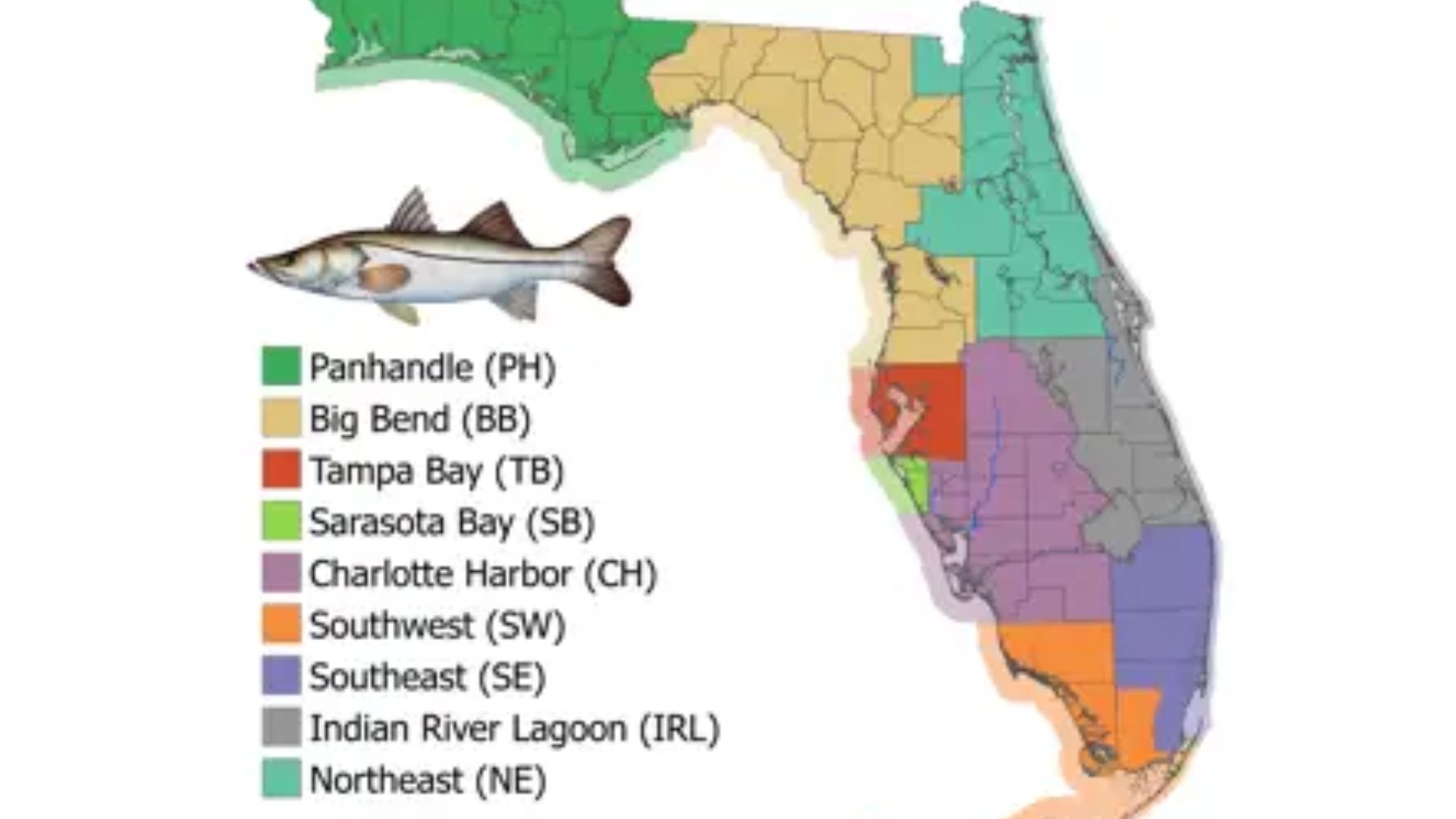
Florida – Anglers along Florida’s east coast are entering a temporary pause in one of the state’s most popular inshore fishing opportunities, as the recreational harvest of snook will officially close on June 1 in three major management regions. The closure affects the Northeast, Indian River Lagoon, and Southeast regions, covering a wide stretch of state, inland, and adjacent federal waters.
The seasonal shutdown is part of Florida’s long-standing effort to protect and manage snook populations, a highly prized game fish known for both its strong fight and its importance to coastal ecosystems. While the closure may be disappointing for recreational fishers, it is a planned measure designed to support long-term sustainability of the species.
According to state regulations, the harvest season will reopen on September 1, giving anglers another opportunity later in the year. Until then, recreational fishing for snook in these regions will be strictly limited, with the closed season running from June 1 through August 31.
The management framework for snook is overseen by the Florida Fish and Wildlife Conservation Commission (FWC), which uses a regional and data-driven approach to evaluate fish populations. Rather than applying a single statewide rule, the FWC divides the fishery into distinct regions and tracks multiple biological and environmental indicators to guide decisions.
Officials say this approach allows for more responsive management tailored to local conditions. Seven key metrics are used to assess the health of snook populations in each region, helping determine seasonal openings, closures, and harvest limits. The goal is to balance recreational fishing opportunities with conservation needs in a fishery that remains one of Florida’s most popular.
Each of the three affected regions follows similar seasonal structures but covers different geographic boundaries and water systems.
In the Northeast region, the management area stretches from the Florida-Georgia border down to New Smyrna Beach, ending at the Lytle Avenue/South Causeway. It includes the St. Johns River and its tributaries, as well as adjacent federal waters. This region excludes several inland water bodies such as the Withlacoochee and Kissimmee rivers, Cypress Lake, and Lakes Hatchineha and Kissimmee.
The Indian River Lagoon region begins at New Smyrna Beach and extends south to the Martin-Palm Beach county line. It includes all waters of the Kissimmee River and Lake Okeechobee, but excludes the Loxahatchee and St. Johns rivers. Like the other regions, it extends into inland waters and nearby federal zones.
Further south, the Southeast region runs from the Martin-Palm Beach county line down to the Miami-Dade and Monroe county line. This area includes major canal systems such as the Hillsboro Canal, Miami Canal, North New River Canal, and West Palm Beach Canal, along with the Loxahatchee River and its tributaries. Lake Okeechobee and Everglades National Park are not included in this specific management area.
Read also: What property tax proposals could mean for Sunrise residents
Across all three regions, the rules remain consistent for recreational anglers during open seasons. The bag limit is one fish per person per day, and the slot limit requires that harvested snook measure between 28 and 32 inches in total length. These restrictions are designed to protect breeding populations while still allowing limited recreational harvest.
The FWC emphasizes that seasonal closures are a key part of its broader conservation strategy. Snook populations are sensitive to environmental changes, including temperature fluctuations, habitat loss, and storm impacts. By limiting harvest during peak reproductive and growth periods, managers aim to maintain healthy population levels over time.
This regional management system also reflects the diversity of Florida’s coastal environments. Conditions in the Atlantic waters of the Northeast differ significantly from those in the Indian River Lagoon or the more urbanized waterways of Southeast Florida. As a result, a one-size-fits-all approach would not provide the same level of biological precision.
Anglers seeking more detailed information are encouraged to consult the FWC’s official resources, including MyFWC.com/Snook. The site provides updated regulations, seasonal calendars, and annual reviews that summarize key findings from ongoing fishery evaluations.
As the June closure takes effect, conservation officials are reminding the public that compliance plays a crucial role in ensuring the future of the fishery. While the temporary restriction may change fishing routines over the summer months, it is intended to preserve opportunities for years to come.
When the season reopens on September 1, anglers will once again be able to target snook under the established guidelines, continuing a tradition that remains deeply tied to Florida’s coastal lifestyle and recreational fishing culture.



Two Pine Crest seniors named semifinalists for 2027 Coca-Cola scholarships

West Palm Beach invites businesses to explore city grants and incentives

West Palm Beach to host free startup workshop for aspiring business owners

Boca Raton chef faces DUI and drug charges after deputies report 102 mph pursuit

Hollywood reminds residents that early voting begins October 19

Broward School Board approves free menstrual products pilot at at least seven schools

Florida permanently protects nearly 1,500 acres across two working cattle ranches

Pine Crest student Alaina Jamal earns recognition for three original poems

Fort Lauderdale opens new water treatment center as part of $666 million project

Broward commissioners approve possible legal action to access sheriff’s headquarters

Man arrested after Pompano Beach shooting leaves one person injured

Overnight lane and ramp closures scheduled on Broward highways through Oct. 29

Sinta Tantra’s Petals of the Moon brings new public art to southern West Palm Beach

DeSantis announces plans for hurricane tax-filing relief as FICPA awaits IRS confirmation

Greater Fort Lauderdale Alliance president and CEO Bob Swindell announces retirement in 2027
-
 South Florida Local News4 days ago
Overnight lane and ramp closures scheduled on Broward highways through Oct. 29
-
 South Florida Local News3 days ago
Florida permanently protects nearly 1,500 acres across two working cattle ranches
-
 South Florida Local News3 days ago
Fort Lauderdale opens new water treatment center as part of $666 million project
-
 South Florida Local News4 days ago
Man arrested after Pompano Beach shooting leaves one person injured