South Florida Local News
Governor Ron DeSantis announces Clyde Morris Boulevard improvement project will begin two years ahead of schedule

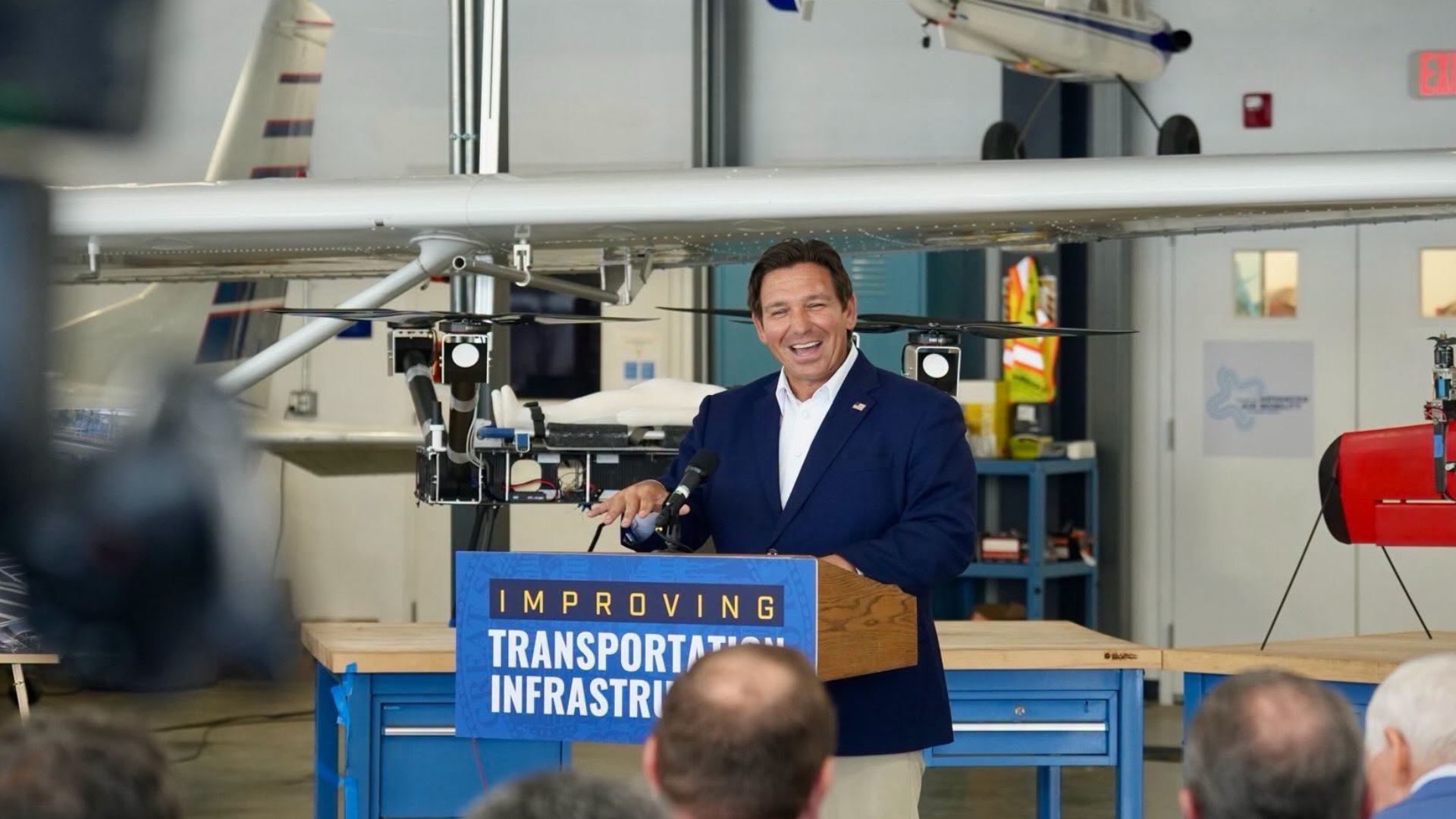
Daytona Beach, Florida – Florida officials are moving ahead with a major transportation project in Daytona Beach that will bring long-awaited safety and traffic improvements to Clyde Morris Boulevard, with construction now set to begin two years earlier than originally planned.
Governor Ron DeSantis announced the accelerated project during a visit to Embry-Riddle Aeronautical University, where he also highlighted the university’s growing partnership with the Florida Department of Transportation on emerging transportation technologies.
The Clyde Morris Boulevard project carries an estimated price tag of $56 million and will focus on the nearly three-mile stretch of State Road 483 between Beville Road and Mason Avenue. Construction is expected to begin this fall, with the work divided into three segments and carried out over the next three years. Completion is currently estimated for 2029.
“Great to be at Embry-Riddle today to highlight Florida’s leadership in advanced air mobility,” said Governor Ron DeSantis. “I signed legislation last year to recognize AAM as an official mode of transportation in Florida. Now, we’re building the infrastructure to test these emerging technologies.”
The improvements planned for Clyde Morris Boulevard are aimed at several groups that use the busy corridor every day, including drivers, pedestrians and bicyclists. Among the most notable changes will be a new pedestrian tunnel under the road just north of the main entrance to Embry-Riddle.
The project will also add raised medians along much of the corridor, wider sidewalks and a 14-foot-wide shared-use path. Traffic signals will be reconstructed, and a new pedestrian crossing will be installed at Buccaneer Way.
Together, the improvements are intended to make movement through the corridor safer and more efficient. Clyde Morris Boulevard serves an important role in the Daytona Beach area, and the work will affect a corridor used by local residents, students, visitors and others traveling through the region.
Read also: Pine Crest student-athlete Harper Kiss earns second place at U.S. Kids Golf Teen World Championship
FDOT Secretary Jared W. Perdue said the project has been a long-standing priority for the area and that moving the work forward sooner will bring needed changes to the corridor.
“Improvements to Clyde Morris Boulevard have been a top priority for this region for years,” said FDOT Secretary Jared W. Perdue, P.E. “Accelerating this project by two years will bring essential safety improvements to a very important corridor for Volusia County, Daytona Beach, and Embry-Riddle University.”
One of the reasons the project can move forward ahead of schedule is the cooperation among state and local partners. Embry-Riddle Aeronautical University, Volusia County and the City of Daytona Beach each donated right of way for the project. Those contributions helped clear the way for construction and shorten the timeline.
The work is taking place near Embry-Riddle, adding another layer to the relationship between the university and the state. While the road project is focused on traditional transportation infrastructure, the governor’s visit also drew attention to research being conducted at the university in the field of Advanced Air Mobility, or AAM.
Embry-Riddle has become involved in research and workforce development tied to technologies that could eventually change the way people and goods move. AAM includes emerging forms of transportation that could support passenger air taxis, cargo delivery, medical transportation and emergency response.
Read also: Five people arrested during West Palm Beach police prostitution enforcement operation
The state sees the technology as one possible way to offer new transportation choices while addressing congestion and improving the movement of goods. Florida also views the development of AAM as an opportunity to strengthen its supply chain and build a workforce prepared for new transportation systems.
Embry-Riddle President P. Barry Butler said the university’s work in the field is closely connected to economic and workforce development across Florida.
“We are deeply grateful for the visionary leadership of Governor Ron DeSantis, the Florida Legislature, and the Florida Department of Transportation, whose commitment has positioned our state as the nation’s leader in advanced air mobility, workforce transformation and the creation of essential jobs that will benefit Floridians for decades to come,” said Embry-Riddle President P. Barry Butler, Ph.D. “The cutting-edge research taking place in Embry-Riddle’s Center for Advanced Air Mobility at its Research Park campus represents the university’s commitment to advancing innovation while also fueling economic development, evolving Florida’s supply chain and creating exponential new pathways for career and job prospects across the state.”
Florida and Embry-Riddle are also working together on research intended to help move AAM technology toward practical use. The work is designed to address gaps in existing data, operational frameworks and readiness models.
The research is being carried out on an accelerated timeline as the state prepares for the possible wider use of advanced transportation technology. Officials say the information developed through the partnership will be important for understanding how these new systems can be tested and eventually operated.
Workforce preparation is another part of the effort. Embry-Riddle and institutions such as Polk State College are expected to help develop training and credentialing opportunities for people who will work in the emerging field.
That includes future pilots, maintenance technicians, engineers and other transportation professionals. As AAM technology develops, Florida will need workers with the skills to test, maintain and operate the systems safely.
The Clyde Morris Boulevard project and the state’s AAM initiative may involve very different types of infrastructure, but officials presented them together as examples of Florida’s broader approach to transportation. The road project addresses immediate needs on the ground, while the work at Embry-Riddle looks toward transportation systems that could become part of the state’s future.
For Daytona Beach residents and others who regularly use Clyde Morris Boulevard, however, the most immediate changes will be physical ones. The new pedestrian tunnel, shared-use path, wider sidewalks, raised medians, upgraded signals and additional crossing are expected to improve the corridor as construction progresses.
The project will be built in three sections over approximately three years. Construction is scheduled to begin this fall, with the full project expected to be completed in 2029.
State officials say accelerating the work by two years will allow the community to receive the safety and transportation improvements sooner than previously expected. The project also reflects the value of cooperation between state agencies, local governments and institutions such as Embry-Riddle.
With transportation playing a direct role in residents’ daily lives, Florida continues to emphasize projects that improve safety, reduce congestion and provide more options for getting around. On Clyde Morris Boulevard, that effort will soon move from planning to construction, bringing a long-discussed project closer to reality for Daytona Beach and the surrounding Volusia County community.



USDA releases first citrus crop forecast for 2026-2027 season with new production estimates for Florida growers

Florida CFO Blaise Ingoglia outlines Hurricane Isaias preparations as emergency rescue teams stand ready to assist affected communities

Dania Beach invites South Florida artists to submit creative designs for new buoy and beacon public art initiative

Pembroke Pines announces free BooVille Halloween celebration on October 28 with tickets now available for local families

Fort Lauderdale announces temporary road closure and traffic restrictions for Riverwalk 10th Annual Fall Festival on October 17

Broward County Public Schools celebrates National School Lunch Week October 12–16 with student contests, exciting prizes and special activities

FWC cancels public meeting on flathead catfish in DeFuniak Springs due to potential tropical storm impacts

Construction begins at Garfield Garage as improvement project moves forward with minimal parking disruptions

Pompano Beach to host free Horse & Hound Costume Event featuring Halloween contests and family-friendly activities

Davie residents invited to free document shredding and prescription drug drop-off event on October 17

Big Brothers Big Sisters of Broward County and Henderson Behavioral Health receive Community Catalyst Award for youth wellness partnership

Pompano Beach residents invited to explore solar energy options through free Broward County Solar Co-op program

FDC hosts Build Your Workforce showcase to connect Florida employers with skilled inmates preparing for release

Town of Davie seeks local restaurants to participate in Veterans Voucher Program ahead of Veterans Day

South Florida residents urged to protect themselves from mosquitoes and mosquito-borne illnesses during mosquito season
-
 South Florida Local News3 days ago
Fort Lauderdale announces temporary road closure and traffic restrictions for Riverwalk 10th Annual Fall Festival on October 17
-
 Uncategorized3 days ago
FWC cancels public meeting on flathead catfish in DeFuniak Springs due to potential tropical storm impacts
-
 South Florida Local News4 days ago
Pompano Beach residents invited to explore solar energy options through free Broward County Solar Co-op program
-
 South Florida Local News3 days ago
Construction begins at Garfield Garage as improvement project moves forward with minimal parking disruptions