South Florida Local News
Weston’s Fourth of July parade float plants find new homes across the city after creating patriotic displays for the community celebration

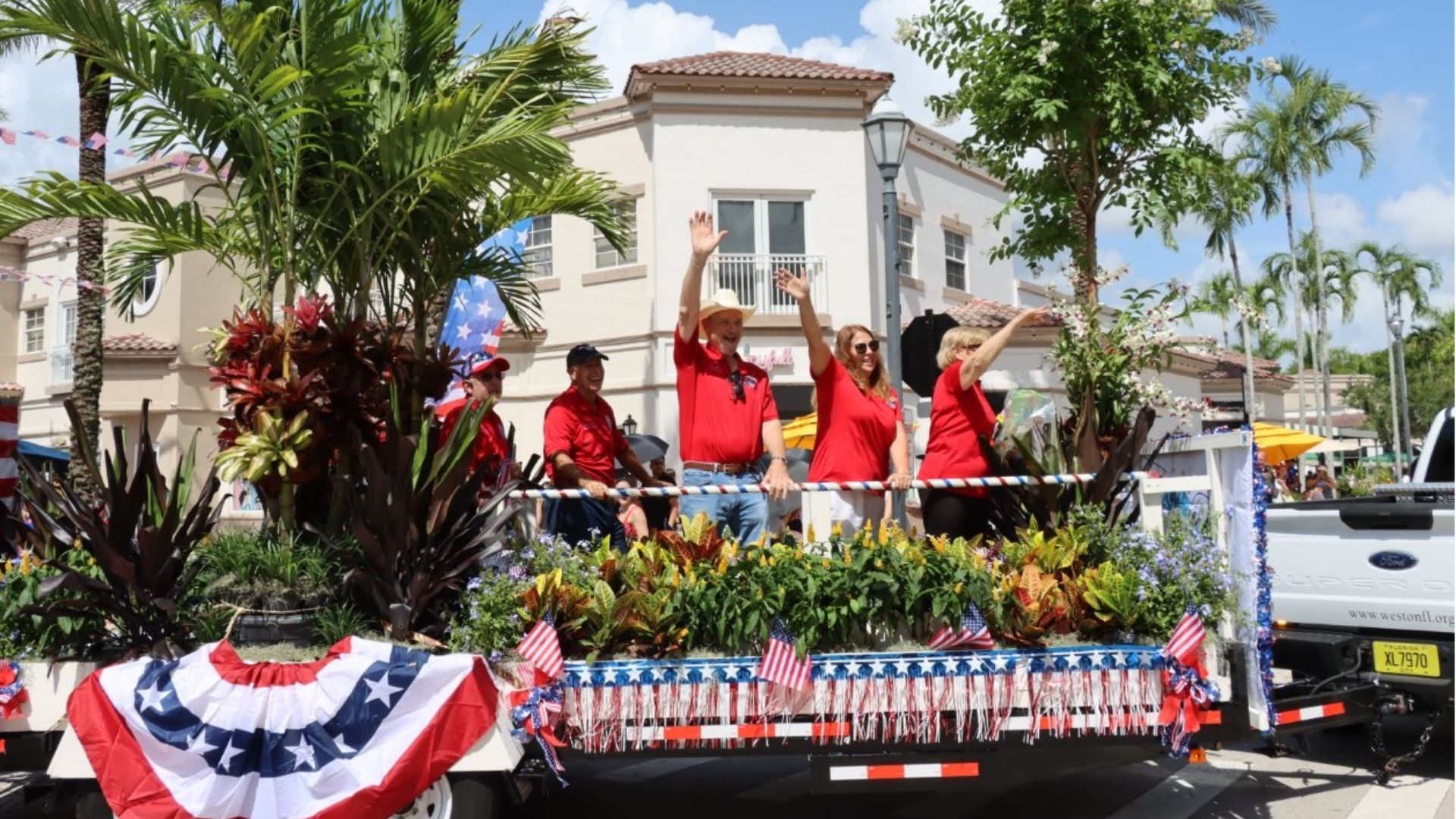
Weston, New York – The colorful plants that help turn Weston’s Fourth of July parade floats into patriotic displays do not disappear once the celebration ends. Instead, they continue serving the community long after the final parade vehicle leaves the route.
Each year, the City of Weston uses hundreds of plants to decorate its Fourth of July floats, creating eye-catching displays for the City Commission and Grand Marshal. But when the parade is over and the crowds have gone home, the landscaping team begins a second phase of the project — carefully removing the plants and giving them new homes throughout the city.
This year, a total of 267 plants, 94 orchids, two palms and three trees were used to create the two parade floats. After bringing color and beauty to the holiday celebration, every plant was relocated and replanted in City-owned landscapes where residents and visitors can continue enjoying them.
The effort reflects Weston’s approach of combining community events with long-term environmental planning. Rather than treating the plants as temporary decorations, the city reuses them as part of its ongoing landscaping efforts.
The collection of plants included a variety of species chosen for their appearance and ability to thrive in the local environment. Among them were Auntie Lou ti plants, Dwarf Ixora, Liriope ‘Super Blue’, Plumbago, Croton ‘Petra’, Boston ferns and colorful bromeliads.
Following the parade, these plants were placed in several public areas throughout Weston. They were added to City-owned right-of-way areas and green spaces, helping improve the appearance of locations including City Hall, Indian Trace Road, Bonaventure Boulevard, Three Village Road and Country Isles Road.
City officials said the tradition is an example of how thoughtful planning can create benefits that last beyond a single event. The same plants that help create memorable parade moments for families and spectators continue contributing to the city’s landscape for years afterward.
The reuse of the plants also supports Weston’s broader goals related to sustainability, responsible resource management and fiscal responsibility. By giving the decorations a permanent purpose, the city reduces waste while improving public spaces throughout the community.
The project requires creativity and careful coordination from the city’s landscaping team. Transforming the floats into colorful displays each year involves planning, design work and attention to detail, but the effort does not stop when the parade ends.
Weston recognized the work of Thad Bielecki, Director of Landscaping, and Andy Matusevich, Assistant Director of Landscaping, for their dedication in creating the parade displays and ensuring that the plants continue providing value after the holiday celebration.
Their work allows the city to combine the excitement of a major community event with practical improvements that residents can enjoy throughout the year. The result is a tradition that celebrates both community pride and responsible use of resources.
For Weston residents, the plants that once decorated Fourth of July floats now serve as a reminder that celebrations can have a lasting impact. What begins as a temporary display of patriotic color becomes a permanent part of the city’s landscape, bringing beauty to public spaces well beyond the holiday weekend.



USDA releases first citrus crop forecast for 2026-2027 season with new production estimates for Florida growers

Florida CFO Blaise Ingoglia outlines Hurricane Isaias preparations as emergency rescue teams stand ready to assist affected communities

Dania Beach invites South Florida artists to submit creative designs for new buoy and beacon public art initiative

Pembroke Pines announces free BooVille Halloween celebration on October 28 with tickets now available for local families

Fort Lauderdale announces temporary road closure and traffic restrictions for Riverwalk 10th Annual Fall Festival on October 17

Broward County Public Schools celebrates National School Lunch Week October 12–16 with student contests, exciting prizes and special activities

FWC cancels public meeting on flathead catfish in DeFuniak Springs due to potential tropical storm impacts

Construction begins at Garfield Garage as improvement project moves forward with minimal parking disruptions

Pompano Beach to host free Horse & Hound Costume Event featuring Halloween contests and family-friendly activities

Davie residents invited to free document shredding and prescription drug drop-off event on October 17

Big Brothers Big Sisters of Broward County and Henderson Behavioral Health receive Community Catalyst Award for youth wellness partnership

Pompano Beach residents invited to explore solar energy options through free Broward County Solar Co-op program

FDC hosts Build Your Workforce showcase to connect Florida employers with skilled inmates preparing for release

Town of Davie seeks local restaurants to participate in Veterans Voucher Program ahead of Veterans Day

South Florida residents urged to protect themselves from mosquitoes and mosquito-borne illnesses during mosquito season
-
 Uncategorized3 days ago
FWC cancels public meeting on flathead catfish in DeFuniak Springs due to potential tropical storm impacts
-
 South Florida Local News2 days ago
Fort Lauderdale announces temporary road closure and traffic restrictions for Riverwalk 10th Annual Fall Festival on October 17
-
 South Florida Local News4 days ago
Pompano Beach residents invited to explore solar energy options through free Broward County Solar Co-op program
-
 South Florida Local News3 days ago
Construction begins at Garfield Garage as improvement project moves forward with minimal parking disruptions