South Florida Local News
New coral restoration innovations offer fresh hope for protecting Florida’s fragile reefs as coastal development continues

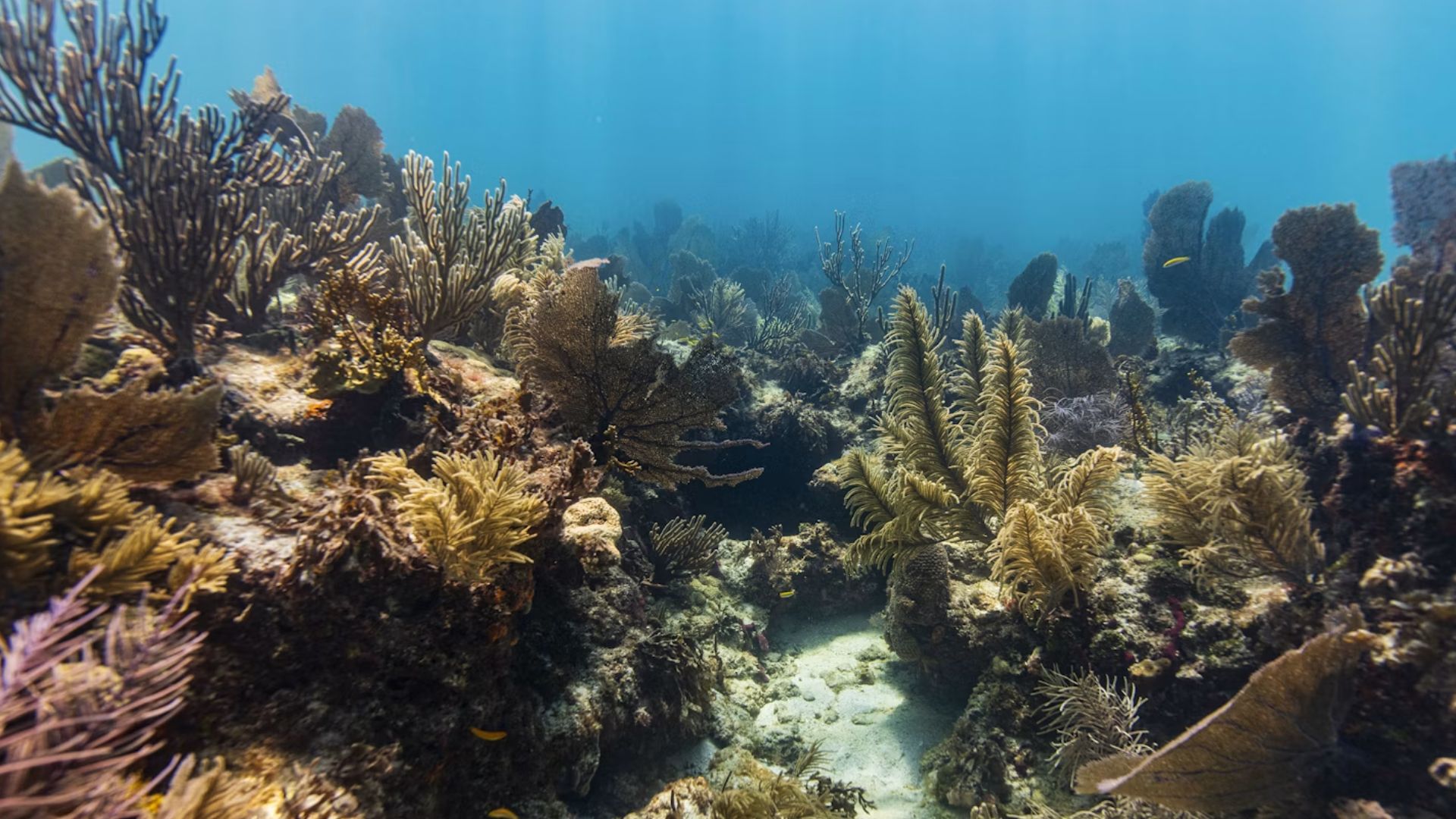
Fort Lauderdale, Florida – South Florida has long faced a difficult balancing act. The region depends on a strong and growing economy, while also being home to marine ecosystems that are among its most valuable natural resources. Its coral reefs, including rare and endangered populations, are especially important. For years, however, large coastal projects and environmental protection have often been treated as competing priorities.
New developments in coral restoration are beginning to challenge that idea.
Advances in marine science and engineering are giving researchers more effective ways to protect and rebuild coral populations, even as major economic projects move forward. Work being done in South Florida is showing that environmental protection does not always have to mean stopping development. With the right technology and planning, restoration can become part of the process.
For marine scientists working directly with coral nurseries, the changes are especially encouraging. Coral restoration has traditionally been difficult and uncertain. Moving nursery-raised coral to a natural reef could produce disappointing results, particularly in places such as Broward and Miami-Dade counties.
Young transplanted corals face numerous threats after they are placed on the ocean floor. Sediment from nearby construction can cover them, while predatory fish can damage or consume them before they have enough time to become established. For decades, survival rates were often little better than a coin flip.
That is beginning to change.
Researchers at Nova Southeastern University’s National Coral Reef Institute are working on treatments designed specifically to help infected corals recover in the wild. One of the major challenges facing Florida’s reefs is Stony Coral Tissue Loss Disease, a serious condition that can spread through coral populations and cause extensive damage.
Read also: Why your tap water may turn cloudy, brown, yellow or even pink
The disease can be associated with conditions involving disturbed sediment, including sediment stirred during dredging, while increased storm activity can also create additional pressure on already stressed reefs.
Researchers have been testing specialized antibiotic pastes and probiotic treatments that are applied directly to infected corals. Rather than simply treating the ocean environment around the reef, these methods target the affected coral itself.
The treatments are not ordinary human medicines repurposed for marine use. They are specialized ecological tools developed with the health of the reef in mind. Applying them can require significant labor, but the results have shown measurable improvements in coral survival and health.
Another promising development involves protecting newly transplanted coral during the earliest stages of its life on a wild reef.
The Coral Fort is designed as a simple protective cradle around young coral. Its purpose is straightforward. By creating a barrier between vulnerable coral and predatory fish, the device gives transplanted colonies more time to grow, strengthen and establish themselves.
What makes the idea particularly unusual is the material used to build the protective device.
The Coral Fort uses drinking straws made from marine-biodegradable material. The straws are produced using fermented canola oil and a material known as PHA, or polyhydroxyalkanoate.
Once placed around the coral, the straws act as a temporary shield. They help prevent predatory fish from reaching the young coral during its most vulnerable period. As the coral develops and becomes stronger, the material naturally breaks down in seawater.
The goal is not to leave behind a permanent structure. Instead, the protection is meant to disappear after it is no longer needed, leaving the growing coral colony in place.
Trials involving the Coral Fort have produced particularly striking results. Survival rates for transplanted coral have risen to more than 90 percent.
That figure represents a major change from the uncertainty that once surrounded coral transplantation. A technique that was previously difficult to predict can now be carried out with much greater reliability. Researchers are gaining better tools not only to move coral but also to give it a stronger chance of surviving once it reaches the reef.
The significance extends beyond a single restoration device or treatment. These innovations point toward a broader shift in how coral restoration can be approached.
Instead of simply trying to compensate for environmental damage after it occurs, scientists can work to strengthen reefs before problems become irreversible. Treating diseased coral and improving the survival of nursery-grown colonies can help rebuild reef resilience over time.
That matters as South Florida continues to consider major coastal projects. The expansion of Port Everglades, the Miami-Dade “Back Bay” storm surge project and beach renourishment efforts along the Broward County coastline are examples of development and infrastructure work that can affect coastal environments.
Such projects will continue to raise questions about how construction and environmental protection can coexist. But the latest restoration work offers a reason for optimism.
The answer is not to ignore the potential effects of development. Coastal projects still need to limit their impact on the natural systems that make South Florida unique. At the same time, new restoration technologies can provide another layer of protection and give damaged or vulnerable reefs a better chance to recover.
The larger lesson may be that economic growth and environmental stewardship do not necessarily have to be permanent opponents.
South Florida has access to marine scientists, research institutions and innovative engineering that can help build a different model. If restoration is treated as a central part of coastal planning, rather than an afterthought, development could move forward while also supporting the recovery of the reefs.
There is no guarantee that technology alone will solve every challenge facing Florida’s coral populations. The reefs remain vulnerable to disease, storms, human activity and other pressures. But the progress being made in laboratories, nurseries and underwater restoration sites shows that the future does not have to be defined by decline.
For a region whose economy and identity are both closely tied to the coast, that is an important possibility.
The combination of local scientific knowledge and practical innovation could offer South Florida a way to protect its marine ecosystems while continuing to grow. The challenge now is making sure those tools are used widely and thoughtfully, so that the region’s natural treasures remain part of its future rather than simply memories of its past.



BCPS and the Flying Classroom bring students and families together for the 2026 Fall STEM Fest on October 3

Florida Department of Children and Families highlights statewide suicide prevention resources and partnerships during September awareness month

Pompano Beach’s Drone Show Extravaganza returns for its fifth year with 500 drones lighting up the night sky

FWC to host free workshop in Venus to help livestock owners prevent and reduce conflicts with wildlife

FDOT issues updated traffic impact report detailing upcoming road construction and lane closures across Davie and Broward County

Fort Lauderdale launches new Certificate of Use program on October 1 with new requirements for local businesses

Hollywood suspends parking fees at city-operated beach garages for local residents

Superintendent Hepburn to host town hall meetings on the state of Broward County Public Schools

Blanche Ely High School launches student-run food truck through partnership with Intuit

Florida officials remind residents how to help sea turtles and hatchlings affected by storms and high waves

Florida Department of Education launches statewide B.E.S.T. Science Standards listening tour to gather public input

Blanche Ely High School unveils new student-run food truck through innovative partnership with Intuit

Florida adds eight more harvest days to the 2026 private recreational Gulf red snapper fishing season

Fort Lauderdale prepares for higher king tides and possible street ponding from September 26 through October 1

West Palm Beach City Commission approves final millage rates and nearly $950 million budget for the 2026/2027 fiscal year
-
 South Florida Local News4 days ago
Florida Department of Education launches statewide B.E.S.T. Science Standards listening tour to gather public input
-
 South Florida Local News4 days ago
Florida officials remind residents how to help sea turtles and hatchlings affected by storms and high waves
-
 South Florida Local News4 days ago
Blanche Ely High School unveils new student-run food truck through innovative partnership with Intuit
-
 South Florida Local News2 days ago
Superintendent Hepburn to host town hall meetings on the state of Broward County Public Schools