South Florida Local News
Recreational snook harvest along Florida’s west coast to close on May 1 as statewide fishery management rules take effect

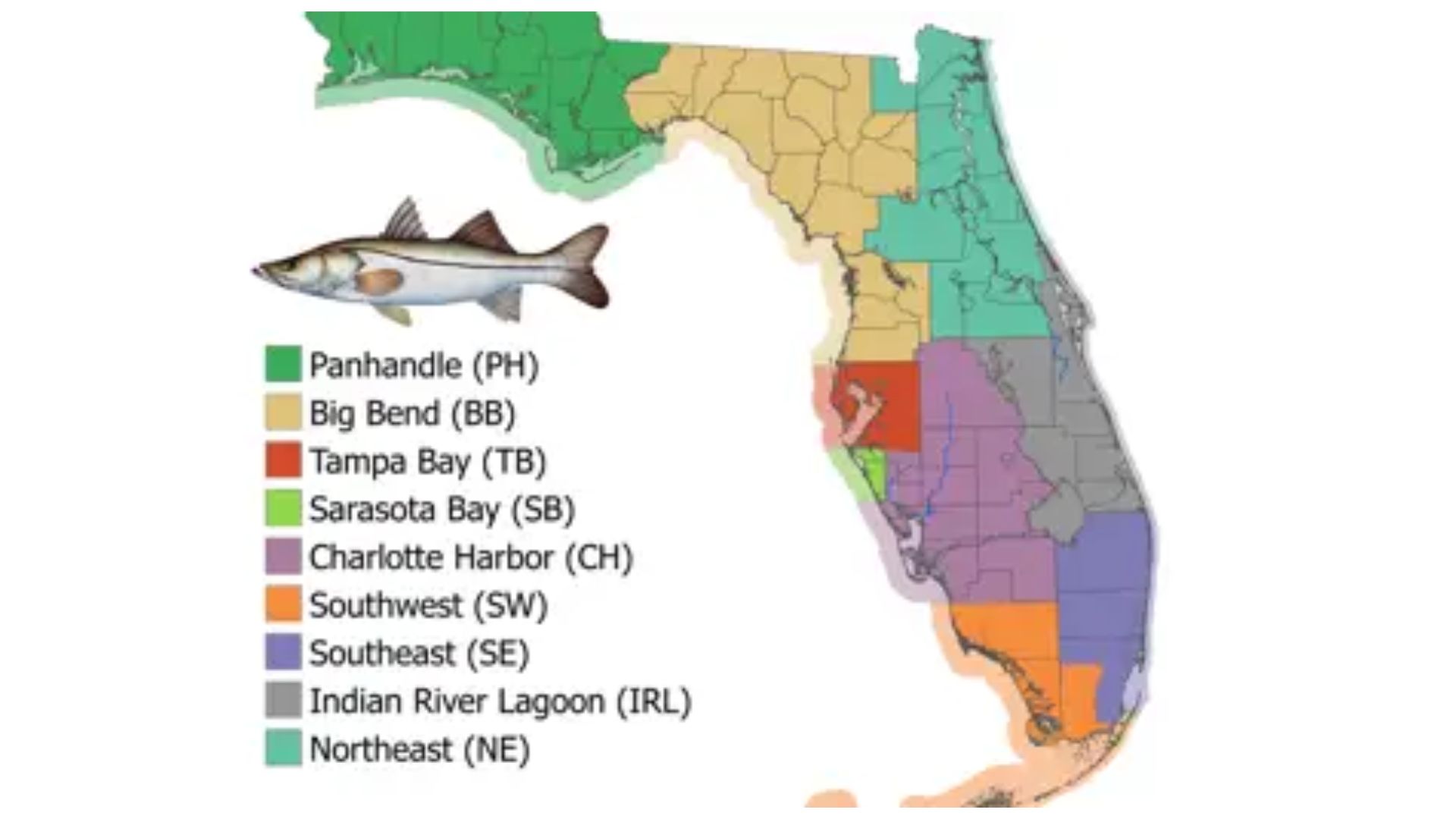
Florida – Anglers along Florida’s west coast are being reminded that a seasonal closure on recreational snook harvest will take effect beginning May 1, as state wildlife managers continue their structured approach to protecting one of the state’s most popular inshore game fish.
The closure applies across several major management regions, including the Panhandle, Big Bend, Tampa Bay, Sarasota Bay, Charlotte Harbor, and Southwest Florida. Each of these areas will see recreational snook harvest temporarily suspended as part of a long-established seasonal cycle designed to support long-term population health and regional fishery balance.
According to the Florida Fish and Wildlife Conservation Commission (FWC), the recreational harvest season will reopen on Sept. 1 in the Panhandle, Big Bend, Tampa Bay, and Sarasota Bay regions. Meanwhile, anglers in Charlotte Harbor and Southwest Florida will have to wait slightly longer, with those waters reopening on Oct. 1.
The agency noted that each management region includes all Florida state and inland waters, as well as adjacent federal waters, meaning the closure applies broadly across coastal and connected waterways where snook are commonly targeted by recreational fishermen.
FWC officials say these seasonal rules are not random restrictions but part of a larger management strategy aimed at maintaining healthy fish populations across different parts of the state. Snook, in particular, remain a highly valued species for both recreational anglers and the broader coastal ecosystem.
The commission uses a regional, data-driven framework that evaluates the fishery through seven different metrics. This approach allows managers to account for local conditions, seasonal trends, and population differences across Florida’s diverse coastal environments.
Officials describe this method as a “holistic management approach,” designed to be more responsive to regional concerns while also ensuring that statewide conservation goals are met over time. The system is intended to balance fishing opportunity with long-term sustainability, especially for high-demand species like snook.
Anglers are encouraged to consult the FWC’s official resources at MyFWC.com/Snook for detailed information, including annual fishery reviews that summarize key findings and help explain how regulations are developed and adjusted each year.
While the May 1 closure applies broadly, each region along Florida’s west coast operates under slightly different seasonal calendars and boundaries, reflecting local ecological conditions and fishing pressure.
In the Panhandle region, the recreational snook season is open from March 1 through April 30 and again from Sept. 1 through Nov. 30. The fishery closes from Dec. 1 through the end of February, as well as from May 1 through Aug. 31. Anglers are limited to one fish per person per day, and snook must measure between 28 and 33 inches in total length to be legally harvested.
The Big Bend region follows a similar structure, with open seasons from March 1 through April 30 and Sept. 1 through Nov. 30, and closures from Dec. 1 through the end of February and from May 1 through Aug. 31. The same one-fish daily bag limit and 28–33 inch slot size also apply.
Moving south into Tampa Bay, regulations remain closely aligned with neighboring regions. The season runs from March 1 through April 30 and from Sept. 1 through Nov. 30, with closures from Dec. 1 through the end of February and from May 1 through Aug. 31. The same harvest limits are enforced, including the one-fish daily bag and 28–33 inch slot requirement.
In Sarasota Bay, seasonal rules mirror Tampa Bay in many ways, with an open season from March 1 through April 30 and Sept. 1 through Nov. 30, and a closed period from May 1 through the end of August and from December through February. However, the geographic boundaries differ slightly, extending from Manatee County down to areas near Venice, while also including several tributaries and coastal systems.
Charlotte Harbor operates under a different schedule, with a shorter fall season. Here, snook can be harvested from March 1 through April 30 and again from Oct. 1 through Nov. 30. The closure period extends from May 1 through September 30 and from December through February. The same daily bag limit and slot size restrictions apply, maintaining consistency across regions.
The Southwest Florida management region, which extends further south through the Florida Keys to the Monroe-Miami-Dade county line, also follows the Charlotte Harbor seasonal structure. That means harvest is allowed from March 1 through April 30 and from Oct. 1 through Nov. 30, with closures spanning May through September and again in winter months.
FWC officials emphasize that these regional differences reflect biological and environmental variation across Florida’s coastline. Snook behavior, spawning cycles, and habitat conditions can differ significantly between northern and southern waters, making a one-size-fits-all regulation less effective.
The Southwest region also includes waters of Everglades National Park, adding another layer of ecological importance to management decisions in that area. Inland boundaries across all regions extend into connected river systems and tributaries, further expanding the reach of seasonal protections.
Across all regions, the regulations remain consistent in one key aspect: anglers are limited to one snook per day, and only fish measuring between 28 and 33 inches total length may be kept during open seasons. These standardized rules are intended to simplify compliance while still allowing limited harvest opportunities.
FWC officials encourage anglers to stay informed as seasonal changes take effect and to review updated regulations before heading out on the water. The agency continues to rely on public cooperation as part of its broader effort to maintain healthy fisheries for future generations.
More detailed information, including maps of regional boundaries and annual stock assessments, is available through the agency’s snook management webpage.



FDC hosts Build Your Workforce showcase to connect Florida employers with skilled inmates preparing for release

Town of Davie seeks local restaurants to participate in Veterans Voucher Program ahead of Veterans Day

South Florida residents urged to protect themselves from mosquitoes and mosquito-borne illnesses during mosquito season

Pompano Beach residents invited to help shape the future of the new E. Pat Larkins Community Center

Free Solar Power Seminar in Pompano Beach helps Broward County residents explore ways to lower electric bills

Pompano Beach Caribbean Fest returns for fifth year with live music, authentic food and family fun

FWC seeks public input on potential changes to African Pompano harvest regulations in Florida

FICPA legislative update highlights advocacy efforts as Florida moves closer to the 2026 election season

Twenty-four Pine Crest School seniors named Commended Scholars in 2026 National Merit Scholarship Program

Town of Davie hosts Halloween Happenings with Police and Fire Rescue Trunk-or-Treat at Bergeron Rodeo Grounds

Hollywood residents urged to prepare for King Tides and possible flooding in low-lying areas

Clematis Street railroad crossing to close for two days while crews complete scheduled maintenance

Fort White Depot earns National Register of Historic Places designation for its role in Florida’s transportation history

Florida launches newly designed driver licenses and identification cards with updated security features and historic state imagery

Nation’s No. 1 Best Farmers Market returns to West Palm Beach for its 32nd season with global flavors and local vendors
-
 South Florida Local News4 days ago
Town of Davie hosts Halloween Happenings with Police and Fire Rescue Trunk-or-Treat at Bergeron Rodeo Grounds
-
 South Florida Local News3 days ago
FICPA legislative update highlights advocacy efforts as Florida moves closer to the 2026 election season
-
 South Florida Local News4 days ago
Clematis Street railroad crossing to close for two days while crews complete scheduled maintenance
-
 South Florida Local News3 days ago
Twenty-four Pine Crest School seniors named Commended Scholars in 2026 National Merit Scholarship Program