South Florida Local News
Seasonal closure for recreational snook harvest begins in December as Florida prepares for conservation measures on both coasts

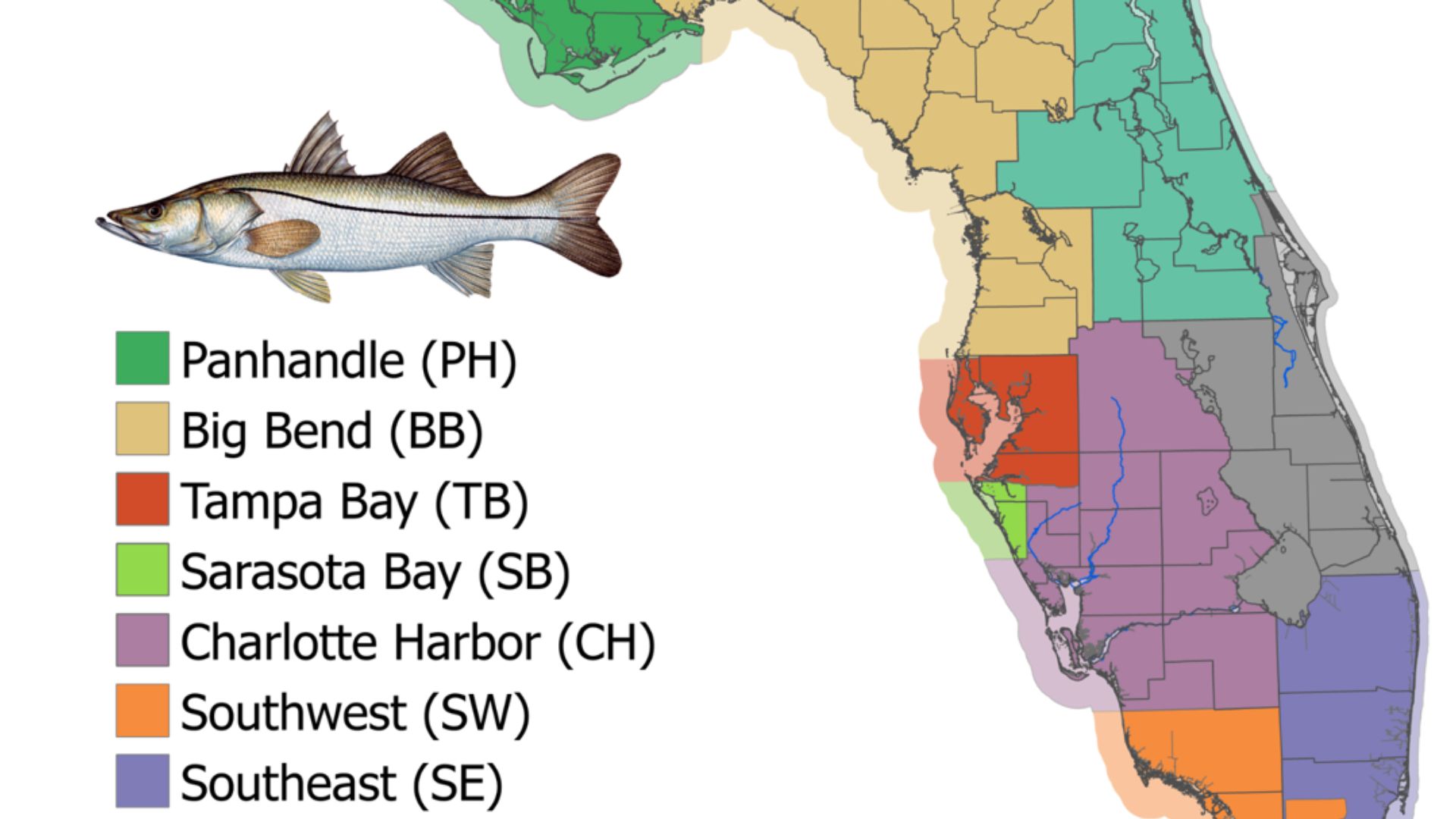
Florida – Florida anglers will soon see annual changes to one of the state’s most closely watched recreational fisheries, as the seasonal closure for snook harvest begins in early December on both coasts. The Florida Fish and Wildlife Conservation Commission (FWC) has announced that restrictions will roll out on different dates depending on the region, marking the start of a winter pause aimed at protecting the state’s iconic inshore species.
According to the agency, “The recreational harvest season for snook closes Dec. 1 in all west coast snook management regions (Panhandle, Big Bend, Tampa Bay, Sarasota Bay, Charlotte Harbor and Southwest) and on Dec. 15 in all east coast snook management regions (Southeast, Indian River Lagoon and Northeast). This includes all Florida state and inland waters within each management region as well as adjacent federal waters.” These seasonal closures, which repeat every year, are designed to support long-term sustainability by giving snook populations a chance to rest and recover during the cooler months.
Snook, known for their strength and popularity among catch-and-release anglers, are managed regionally across Florida. FWC uses a system that divides the state into multiple management zones, each shaped by local habitat, climate, and fishing pressure. The organization says this regional framework is essential. “The regional management regions are part of the Florida Fish and Wildlife Conservation Commission’s (FWC) holistic management approach for Florida’s most popular inshore fisheries. This approach uses seven metrics to evaluate the fishery by region, allowing the FWC to be more responsive to local concerns.” Anglers who want to explore this information more deeply can review annual evaluations online. “To learn more, visit MyFWC.com/Snook. This page includes the snook annual reviews, which provide summaries of key findings from the annual evaluation of management metrics for each region.”
Even though the closure dates differ from one part of the state to another, the rules governing open seasons, slot limits, and bag limits remain very specific. On the west coast, from the Panhandle down to Southwest Florida, the harvest windows open in spring and fall, with the rest of the year falling under closed status. For example, the Panhandle region lists an open season from March 1 through April 30 and again from September 1 through November 30. The identical timeframe applies to the Big Bend, Tampa Bay, and Sarasota Bay regions, all of which also share the same “Bag Limit: One fish per day per person” and “Slot Limit: 28-33 inches total length.”
Charlotte Harbor and Southwest Florida follow a slightly different calendar, with their second open season running from October 1 through November 30. Both regions match the west coast slot size and daily limit, but extend their closed season from May 1 through September 30. These rules are designed to align with spawning behavior, heat stress in summer waters, and seasonal fishing pressure.
On the east coast, the pattern shifts again. The Southeast, Indian River Lagoon, and Northeast regions each begin their harvest season earlier in the year, running from February 1 to May 31. Their fall season opens September 1 and closes December 14. When the closure begins, it runs from December 15 through January 31, and then again from June 1 through August 31. These eastern regions also carry a one-fish daily limit but maintain a slightly narrower “Slot Limit: 28-32 inches total length.”
While the exact dates may vary, the core guidance is consistent: the snook harvest is tightly controlled to ensure the species remains healthy and resilient. These rules reflect years of scientific assessment and ongoing reviews of stock strength, weather impacts, and angler activity. Because snook are sensitive to cold temperatures and seasonal shifts, winter closures play a key role in protecting them from extra stress during vulnerable periods.
Read also: Oakland Park transforms Jaco Pastorius Park into a magical holiday village for families to enjoy
Along both coasts, snook fishing remains extremely popular even when harvest is not permitted. During closed seasons, catch-and-release fishing is still allowed unless otherwise specified, and many anglers take the opportunity to enjoy the sport while still contributing to conservation efforts. FWC reminds anglers that proper handling reduces fish mortality and increases the chances of successful release, especially during the cooler months when sudden temperature drops can affect fish behavior.
Florida’s fisheries managers continue to emphasize that these seasonal restrictions are part of a broad strategy to keep the snook population strong for future generations. The structured system of open windows, slot sizes, and bag limits has been shaped by years of data and feedback, and the regional approach allows the agency to make adjustments based on local environmental conditions.
With the holiday season approaching and winter weather beginning to shift coastal waters, the upcoming closure dates serve as a reminder for anglers to check local regulations before heading out. Snook enthusiasts can still enjoy the thrill of the catch during much of the year, but the winter break is an essential pause in Florida’s ongoing commitment to healthy and sustainable fisheries.



Two Pine Crest seniors named semifinalists for 2027 Coca-Cola scholarships

West Palm Beach invites businesses to explore city grants and incentives

West Palm Beach to host free startup workshop for aspiring business owners

Boca Raton chef faces DUI and drug charges after deputies report 102 mph pursuit

Hollywood reminds residents that early voting begins October 19

Broward School Board approves free menstrual products pilot at at least seven schools

Florida permanently protects nearly 1,500 acres across two working cattle ranches

Pine Crest student Alaina Jamal earns recognition for three original poems

Fort Lauderdale opens new water treatment center as part of $666 million project

Broward commissioners approve possible legal action to access sheriff’s headquarters

Man arrested after Pompano Beach shooting leaves one person injured

Overnight lane and ramp closures scheduled on Broward highways through Oct. 29

Sinta Tantra’s Petals of the Moon brings new public art to southern West Palm Beach

DeSantis announces plans for hurricane tax-filing relief as FICPA awaits IRS confirmation

Greater Fort Lauderdale Alliance president and CEO Bob Swindell announces retirement in 2027
-
 South Florida Local News4 days ago
Overnight lane and ramp closures scheduled on Broward highways through Oct. 29
-
 South Florida Local News3 days ago
Florida permanently protects nearly 1,500 acres across two working cattle ranches
-
 South Florida Local News4 days ago
Man arrested after Pompano Beach shooting leaves one person injured
-
 South Florida Local News3 days ago
Fort Lauderdale opens new water treatment center as part of $666 million project