South Florida Local News
Governor Ron DeSantis announces historic student achievement in Florida end-of-year progress monitoring results

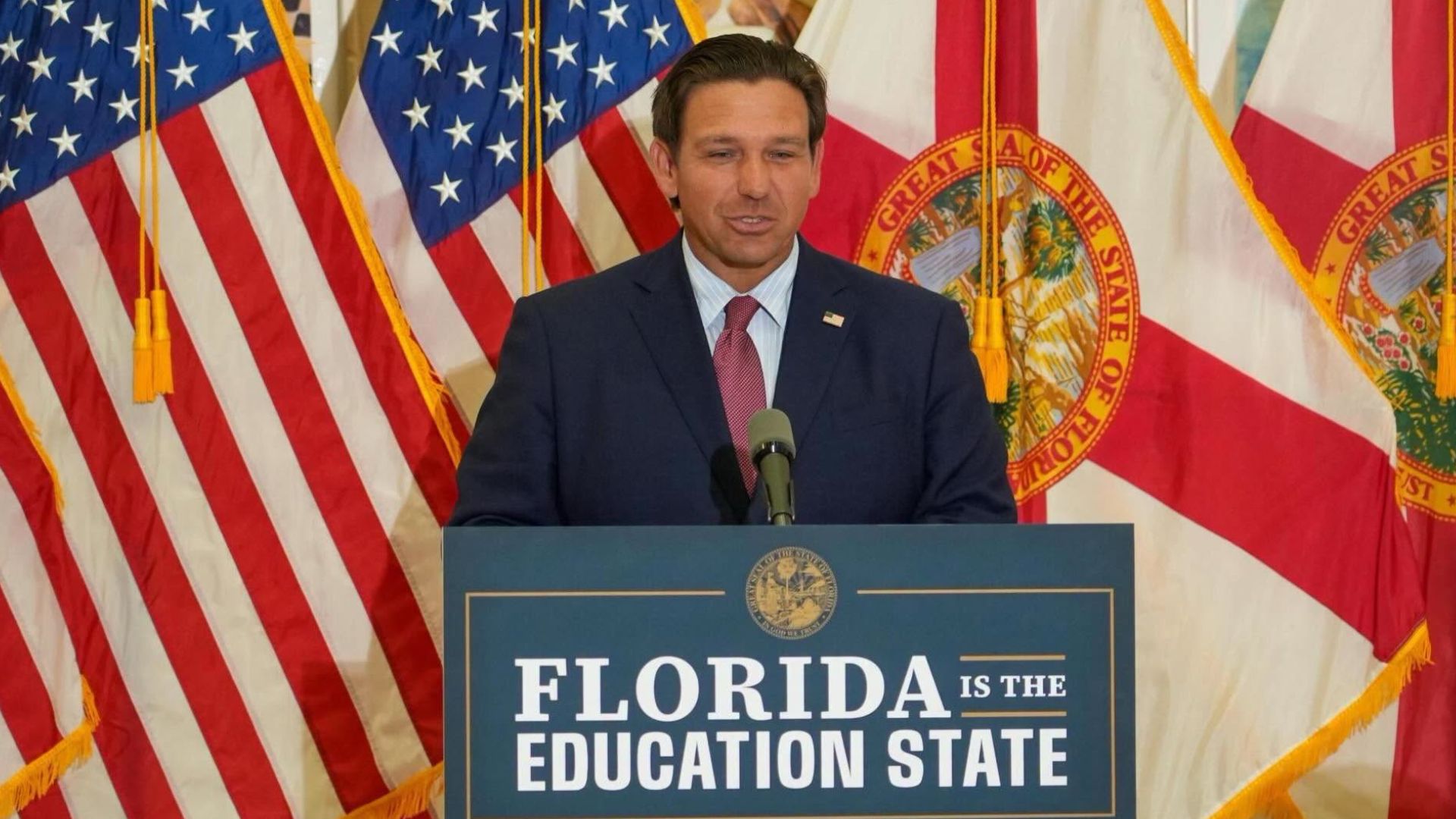
Tallahassee, Florida – Florida education officials are pointing to what they describe as a historic moment for student performance, as new end-of-year progress monitoring results show that more than 60% of students are now performing at or above grade level in both English language arts and mathematics for the first time in state history.
Governor Ron DeSantis announced the results in Tallahassee, framing the gains as evidence of long-term education reforms that have reshaped how student progress is measured and how schools respond to academic needs. The data covers students across multiple grade levels and subjects and reflects performance trends between 2023 and 2026.
At the center of the announcement is a milestone figure: 61% of students in English language arts and 62% in mathematics are now meeting or exceeding grade-level expectations on end-of-year assessments. State leaders say this represents steady, measurable growth since the introduction of Florida’s coordinated progress monitoring system.
Over a three-year span, the state reports that ELA performance rose from 49% in 2023 to 61% in 2026, a 12-point increase. Mathematics performance rose from 53% to 62% over the same period, a nine-point gain. Officials say the increases reflect both structural changes in how students are evaluated and sustained instructional improvements in classrooms.
Governor DeSantis credited Florida’s broader education strategy for the results, pointing to higher expectations, expanded parental involvement, and teacher support as key drivers.
“Florida did not become the Education State by accident. We got here by setting high expectations, empowering parents, supporting teachers, and refusing to settle for the status quo,” said Governor Ron DeSantis. “For the first time ever, more than 60 percent of Florida students are now performing on or above grade level in both English language arts and mathematics. This success demonstrates that our education reforms, like progress monitoring, are delivering real results for our students.”
Education Commissioner Anastasios Kamoutsas also highlighted the results, describing them as a reflection of coordinated effort across schools, families, and educators statewide.
“I am very proud of the progress monitoring results this year. These tremendous gains are a testament to the hard work of Florida’s students, the unwavering support of parents, and the high-quality instruction delivered by teachers across the state,” said Commissioner of Education Anastasios Kamoutsas. “Galatians 6:7 reminds us that, ‘…for whatever a man sows, that will he also reap.’ This year’s accomplishments are evidence of the seeds we have sown through a commitment to student achievement. As we celebrate these record breaking results, we must build on this momentum to achieve even greater success for Florida’s students in the years ahead.”
Florida officials emphasized that the improvements are tied closely to the state’s transition to a progress monitoring system, which replaced traditional end-of-year-only testing. The system provides multiple checkpoints throughout the school year, allowing educators to track student learning in real time and adjust instruction earlier.
Before the change, state leaders say students could fall behind without schools having timely data to intervene. Now, schools receive periodic results that help identify gaps and guide targeted support before the end of the academic year.
Since the system was introduced in 2023, Florida has reported steady improvements across multiple subjects and student groups, with gains expanding year after year.
Officials also highlighted broader statewide increases in the number of students performing at grade level. In English language arts, more than 150,000 additional students in grades 3 through 10 are now meeting or exceeding expectations compared to the early years of implementation. In mathematics, nearly 115,000 additional students are now performing at grade level across all assessments.
In grades 3 through 10, 61% of students scored on or above grade level on the end-of-year ELA progress monitoring assessment, known as PM3. That marks a four-point increase from 2025 and a 12-point increase from 2023.
State data also shows significant improvement between the beginning and end of the school year. At the start of the year (PM1), only 39% of students were performing at grade level, compared to 61% by PM3, a 22-point increase over the course of a single school year.
Performance gains were also reported across student subgroups. Economically disadvantaged students, African American students, Hispanic students, and English language learners each improved by five percentage points compared to 2025. Students with disabilities increased by three percentage points in ELA performance.
Read also: Miramar launches Venezuela earthquake relief effort with Global Empowerment Mission partnership
Mathematics results followed a similar pattern. In grades 3 through 8, 62% of students scored at or above grade level on the end-of-year assessment, an increase of three percentage points from 2025 and nine percentage points from 2023.
The most dramatic growth appears when comparing beginning-of-year and end-of-year data. Only 16% of students were performing at grade level at PM1, compared to 62% at PM3, representing a 46-point increase over the academic year.
Subgroup performance also improved. English language learners increased by six percentage points, Hispanic students by four points, and both economically disadvantaged students and African American students by three points. Students with disabilities also saw a two-point increase.
High school math assessments also showed upward movement. In Algebra 1, 61% of students scored on or above grade level, marking a four-point increase from 2025 and an 11-point increase from 2023. Geometry results reached 55%, a one-point increase from last year and a nine-point rise since 2023.
Officials noted that African American students, Hispanic students, and English language learners all improved their Algebra 1 performance by four percentage points compared to 2025. In Geometry, African American, Hispanic, and White students each posted gains of two percentage points.
Science assessments across multiple grade levels also reached record performance levels since testing began. In fifth grade science, 60% of students scored at or above grade level, a five-point increase from 2025. In eighth grade science, 57% of students met expectations, up four points. Biology 1 saw the highest performance, with 74% of students scoring at or above grade level, a four-point increase.
Officials reported notable subgroup gains as well. In fifth grade science, African American students, Hispanic students, and students from economically disadvantaged backgrounds each improved by six percentage points, while students with disabilities and English language learners increased by five points.
In eighth grade science, African American students improved by six points, while economically disadvantaged and Hispanic students increased by four points. Biology 1 results showed Hispanic students and English language learners improving by four points compared to the previous year.
Social studies assessments in Civics and U.S. History also reached their highest recorded levels. In Civics, 76% of students scored at or above grade level, a six-point increase from 2025. U.S. History reached 73%, up three points.
Subgroup performance showed consistent gains. English language learners improved Civics scores by eight points, while economically disadvantaged students, Hispanic students, and African American students each increased by seven points. Students with disabilities improved by six points.
In U.S. History, African American students increased performance by five percentage points, while students with disabilities improved by four points.
State leaders say the consistent upward trend across subjects reflects a structural shift in Florida’s education system rather than short-term fluctuation. Since adopting progress monitoring in 2023, the state has emphasized early intervention, frequent data checks, and targeted instruction as central strategies.
Officials also noted that the system has allowed teachers and parents to respond more quickly to student needs, rather than waiting for a single end-of-year exam to identify learning gaps.
While celebrating the results, education leaders said the focus now is on maintaining momentum and continuing to expand gains across all student groups and regions of the state. The data, they argue, suggests that sustained attention to early measurement and instructional support is reshaping academic outcomes across Florida’s schools.
As the 2026 results close out another academic cycle, state officials describe the findings as both a milestone and a benchmark for future improvement, with expectations that continued refinement of the progress monitoring system will drive further gains in the years ahead.



BCPS and the Flying Classroom bring students and families together for the 2026 Fall STEM Fest on October 3

Florida Department of Children and Families highlights statewide suicide prevention resources and partnerships during September awareness month

Pompano Beach’s Drone Show Extravaganza returns for its fifth year with 500 drones lighting up the night sky

FWC to host free workshop in Venus to help livestock owners prevent and reduce conflicts with wildlife

FDOT issues updated traffic impact report detailing upcoming road construction and lane closures across Davie and Broward County

Fort Lauderdale launches new Certificate of Use program on October 1 with new requirements for local businesses

Hollywood suspends parking fees at city-operated beach garages for local residents

Superintendent Hepburn to host town hall meetings on the state of Broward County Public Schools

Blanche Ely High School launches student-run food truck through partnership with Intuit

Florida officials remind residents how to help sea turtles and hatchlings affected by storms and high waves

Florida Department of Education launches statewide B.E.S.T. Science Standards listening tour to gather public input

Blanche Ely High School unveils new student-run food truck through innovative partnership with Intuit

Florida adds eight more harvest days to the 2026 private recreational Gulf red snapper fishing season

Fort Lauderdale prepares for higher king tides and possible street ponding from September 26 through October 1

West Palm Beach City Commission approves final millage rates and nearly $950 million budget for the 2026/2027 fiscal year
-
 South Florida Local News4 days ago
Florida Department of Education launches statewide B.E.S.T. Science Standards listening tour to gather public input
-
 South Florida Local News4 days ago
Florida officials remind residents how to help sea turtles and hatchlings affected by storms and high waves
-
 South Florida Local News4 days ago
Blanche Ely High School unveils new student-run food truck through innovative partnership with Intuit
-
 South Florida Local News2 days ago
Superintendent Hepburn to host town hall meetings on the state of Broward County Public Schools